Do you want to go to Sri Lanka too? We traveled around for over four weeks, road-tripping in “our” tuk-tuk! Read all about our four-week Sri Lanka itinerary in this travel report. Including all our tips for staying at the most beautiful spots in Sri Lanka. Let us know how you enjoyed it!
* This article contains affiliate links. If you book or buy something through these links, we earn a small commission. This helps us keep this travel blog running and expand it with more travel and reading tips for you.
Why go to Sri Lanka?
From palm-fringed beaches to historic forts, from elephant paradise to tea plantations, and from ancient temples to jungle: Sri Lanka is incredibly diverse! In just a few hours, you can be in a completely different landscape. Or even in an area with a completely different language. Whether you love nature or culture, want to relax on the beach, surf, or hike, everyone will find their favorite things to do in Sri Lanka.
We really came for Sri Lank’s nature. And yes, palm beaches are nature too, aren’t they? We thoroughly enjoyed the beautiful national parks: Yala NP, Kaudulla NP, and Wilpattu NP. With endless elephants – there are as many as 6,000 living on this relatively small island. You are bound to spot one there, although you do have to look for it. And many more animals live in the national parks of Sri Lanka, and beyond. Hiking through the forests and hills around Ella and exploring the bright green tea plantations around Nuwara Eliya complete the picture.
“‘What is that?’ A beige and black, woolly creature with a swishing tail shoots steeply up a tall palm tree. As big as a dog, but dogs don’t climb upright up tree trunks. There are plenty of stray dogs in Sri Lanka, but you see those on the street, on the beach. We are sitting on our covered terrace near Goyambokka Beach. ‘It looks like a lemur, but we are in Sri Lanka and not in Madagascar, right…?’ Then we suddenly realize: they have giant squirrels here! Could this be one? Yes! These animals look almost nothing like an ordinary squirrel, except suddenly when they are nibbling on a nut. This is why we are in Sri Lanka! “

How long in Sri Lanka?
Thirty-day e-visa
We went to Sri Lanka for over four weeks, but of course, not everyone has that much time. At the same time: we really haven’t been everywhere on this teardrop-shaped island yet and could easily have spent two months in Sri Lanka. But beware: the cheapest e-visa is valid for 30 days, and if you want to stay longer, you will have to pay for a whole extra month’s visa. Check the visa requirements for your nationality on the official website.
TIP – For the most recent information regarding visa requirements and applying for/paying for an e-visa (ETA), check the official Sri Lanka government website. Be careful not to overpay on other websites offering visa services.
Four-week itinerary to Sri Lanka
If you have four weeks to travel, you can see very different parts of Sri Lanka: from west to south, from east to north. Depending on the mode of transport you choose and your preference for fast or slow travel, you can tour the entire island in four weeks or thoroughly enjoy and relax (or surf, for example) in one or two regions of Sri Lanka. If you are traveling in Sri Lanka for four weeks or longer, take into account the differences between the rainy season on the west and south coasts and the rainy season on the east coast and in the (drier) north.

A four-week itinerary through Sri Lanka could look roughly like this (although we did it just a little differently…):
- Week 1 – South Coast of Sri Lanka from Galle to Tangalle & Yala National Park
- Week 2 – The central hills (and optionally Arugam Bay or hiking in the Knuckles Range or climbing Adam’s Peak)
- Week 3 – The north of Sri Lanka (Trincomalee and maybe Jaffna)
- Week 4 – The Cultural Triangle and the West Coast with Wilpattu NP, your trip ending in Colombo and/or Negombo
Want to know more details about OUR four-week itinerary through Sri Lanka? Read on!

Two-week Sri Lanka itinerary
Many people choose a two-week holiday in Sri Lanka. With two weeks in Sri Lanka, you can really get a good impression of this compact and diverse country. Many people tour the southwest in two weeks: this is quite doable with a few hours’ drive between destinations, especially if you take a taxi. It is also just about doable by tuk-tuk, but you will rack up a relatively large number of driving hours, so it is wise to choose and not try to do everything. If you want to travel around by bus for two weeks, choose your most important destinations.
Ideas for a two-week Sri Lanka itinerary:
- Days 1-5 – The south coast from Galle to Tangalle with Yala NP (and/or opt for a half-day safari in another national park later in your trip)
- Days 6-9 – The hill country from Ella to Kandy (with perhaps a detour on the back roads of the tea plantations)
- Days 10-14 – The Cultural Triangle with Sigiriya, Dambulla, and Anuradhapura as highlights, concluding your trip in Negombo to fly back home.

Traveling Sri Lanka by taxi, rental car, tuk-tuk, or public transport?
Traveling by tuk-tuk in Sri Lanka yourself
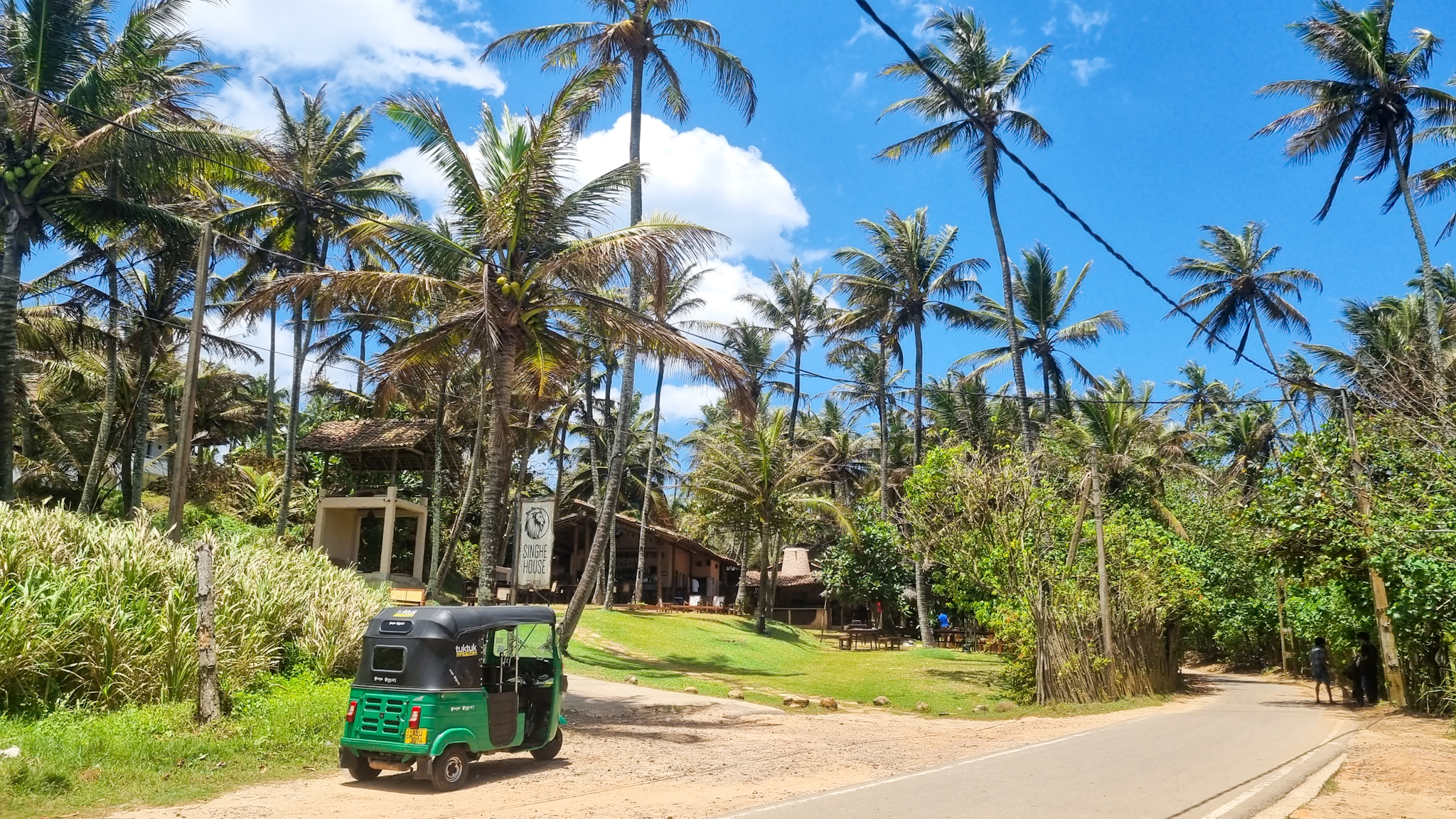
We had so much fun in our tuk-tuk, rented from Tuktukrental.com! It allowed us to choose for ourselves how we wanted to spend the day—driving somewhere for a quick errand or a coffee shop, and navigating unexpected little winding paths. It was wonderful! And the best part is: this is a social enterprise where the tuk-tuks remain the property of their Sri Lankan owners.
Book your tuktuk here now at Tuktukrental.com
TIP – To drive a tuk-tuk in Sri Lanka as a foreigner, you need a Sri Lankan driver’s permit plus an International Driving Permit. You can have Tuktuk Rental apply for these in advance. Check Tuktukrental.com for the latest requirements.
Take your time
Some people choose to rent a tuk-tuk for a few days just for the experience. But we really liked having more time to get used to driving the tuk-tuk (manual shifting, Sri Lankan traffic, dodging speeding buses, etc.), and enjoying it more as a result.
We recommend driving no more than 100 km per day with the tuk-tuk (approx. 3 hours/day). The maximum speed is 40 km/h, but you will go slower on busy stretches or in the mountains. This way, you will have energy left at the end of the day to do something! Driving yourself in the evening is strongly discouraged.


TIP – Short trips or a quick evening trip to a restaurant from your homestay, hostel, or hotel can also be easily arranged with a driverless tuk-tuk. The Sri Lankan PickMe app is very practical for this. It predicts the price for tuk-tuks or taxis in advance. You then pay the driver in cash (plus a small tip, preferably). Many homestays or hotels are happy to arrange a tuk-tuk for you or have one available to take you somewhere. Always make clear agreements about the price beforehand if you are not using the PickMe app.
Budget travel in Sri Lanka: by bus!
Yet, there are also good reasons to choose other modes of transport in Sri Lanka. The most budget-friendly option for longer distances is the local bus. And there are plenty of them. Especially between cities and towns, and along the South Coast, the bus is simply a very smart choice. And a unique experience!
You can’t miss Sri Lanka’s colorful buses. They run fixed routes, and if you ask around a bit, you’ll quickly know which buses to take. Even transferring is perfectly fine, if necessary. There are often bus stops along the larger roads.

Nice and easy by taxi through Sri Lanka
The easiest way to get around Sri Lanka is by taxi. You can arrange this per trip, multiple trips, or hire a driver to drive you around for your entire holiday. You can book single trips via PickMe, but you can often get a better deal by negotiating directly with a driver (via WhatsApp – many tips regarding recommended drivers circulate in traveler groups), or by using one of the taxi platforms.
We used the direct WhatsApp service of taxi platform Less Taxi several times and were very satisfied with the service! On a mid-range budget, you don’t have to forgo taxis because of the cost: traveling around for a month with individual taxi rides is about as expensive as renting your ‘own’ tuk-tuk. Sharing a taxi with other travelers makes it even more cost-effective.

Independent and comfortable: Renting a car in Sri Lanka
Renting a car in Sri Lanka is easy, although it is not the most budget-friendly option. Having your own rental car in Sri Lanka offers freedom and comfort. This option seems particularly suitable if you don’t have much time, are experienced in slightly chaotic traffic, and enjoy road trips. It is advisable to choose a small car, as back roads are often quite narrow. Check with your hotels if there is parking space available.
You can arrange car rental in Sri Lanka via
Taking the train in Sri Lanka
Trains in Sri Lanka are an experience in themselves and a great option if you are a bit more flexible. The most famous train ride is through the tea hills between Ella and Kandy, but there are many more train routes in Sri Lanka. Traveling by train from Colombo to Galle, along the South Coast, or from Colombo to Kandy is perfectly doable. Train travel in Sri Lanka is also not expensive. We saved the trains of Sri Lanka for another time.
TIP – Check the latest info on train schedules through online platforms and social media. A 2025 cylcone damaged lots of routes, and repairs are still ongoing. Also read our personal blog on How to get to Nine Arch Bridge in Ella and find the best photo spots? A 2026 update!

Our personal four-week Sri Lanka itinerary with 18 top things to do
We traveled Sri Lanka for four weeks. We did our Sri Lanka itinerary counter-clockwise. From the airport near Negombo, we took a pre-arranged taxi to Unawatuna, near Galle. A wide highway lead us to the south coast through a vibrantly green landscape in a few hours.
+++++++++++++++++++++++
○ WEEK 1 – The South Coast of Sri Lanka and Yala National Park
Our accommodations during our first week in Sri Lanka:
- Aurora (Hotel) – Unawatuna – 2 nights
- Goyambokka Guesthouse – 3 nights
- My Village Guesthouse – Tissamaharama – 2 nights
Relaxation, good food, cozy cafes, and a choice of countless beaches: that is the south coast of Sri Lanka. And at the same time, you really do notice that you are in Sri Lanka, with its very own unique identity.
#1 – Beach life in Unawatuna
We chose Unawatuna to arrive in Sri Lanka. Close to historic Galle and with an immediate beach vibe. Outside of the high season, it is nice and quiet here, without masses of beer bellies and noisy parties. Opting for a comfortable hotel, we stayed within walking distance of the beach: Aurora, highly recommended for ending or starting your trip through Sri Lanka!


After a good night’s sleep, our tuk-tuk from Tuktukrental.com is delivered. We take a tuk-tuk driving lesson for over half an hour on the main road, practice reversing and U-turns, and are then handed our Sri Lankan driving license. We can now hit the road on our own!
* Accommodation tips in Unawatuna
Just outside the center of Unawatuna
In the small central street of Unawatuna
#2 – Day trip to Galle Fort
From Unawatuna, we spend an afternoon at Galle Fort. It takes less than half an hour by tuk-tuk. You can park on the street in Galle Fort for just a small fee. It is quite warm in the sun in the middle of the day, but there are plenty of spots to grab a drink or a bite to eat every now and then, for example in one of the old colonial VOC buildings. Strolling a bit through the back streets and staring at the sea from the city walls towards the end of the afternoon is what makes Galle a top spot.

* Accommodation tips in Galle
- Brixia Cafe and Guesthouse – just outside the fort
Three beautiful options within the fortress walls of Galle Fort:
You can also opt for real luxury in Galle:

#3 – Along the coast: Ahangame, Weligama, Mirissa and Matara
We are traveling along the South Coast of Sri Lanka by tuk-tuk. We could have lingered here much longer and at more than one spot. Around Ahangame (Koggala Beach), we drive past beaches with the occasional fisherman on a pole—the iconic image for tourists on these beaches. Surfers and lovers of a party and coffee by the beach seem to stop here in particular.
At Welligama, the road runs right along the beach. It is truly fantastic to drive past in a tuk-tuk like this, with a view. Perfect for a quick stop overlooking the sea and the large bay here. We read that this is *the* spot for beginner surfers. The next little bay we drive past is Mirissa.

Mirissa is clearly the most popular spot on this stretch of coast. The busy road is located a bit further from the beach here. Be careful with your tuk-tuk in the traffic here! You have a wide choice of (very beautiful) hotels here, and there are also quite a few restaurants and cafes. We almost did stay here ourselves, for example at Peacock Villa. But we are skipping this village and the popular Instagram spot of Coconut Tree Hill after all. We are on our way to our “own” palm beaches near Tangalle!
* Accommodation tips in Mirissa
#4 – Beach hopping between Tangalle, Goyambokka en Hiriketiya
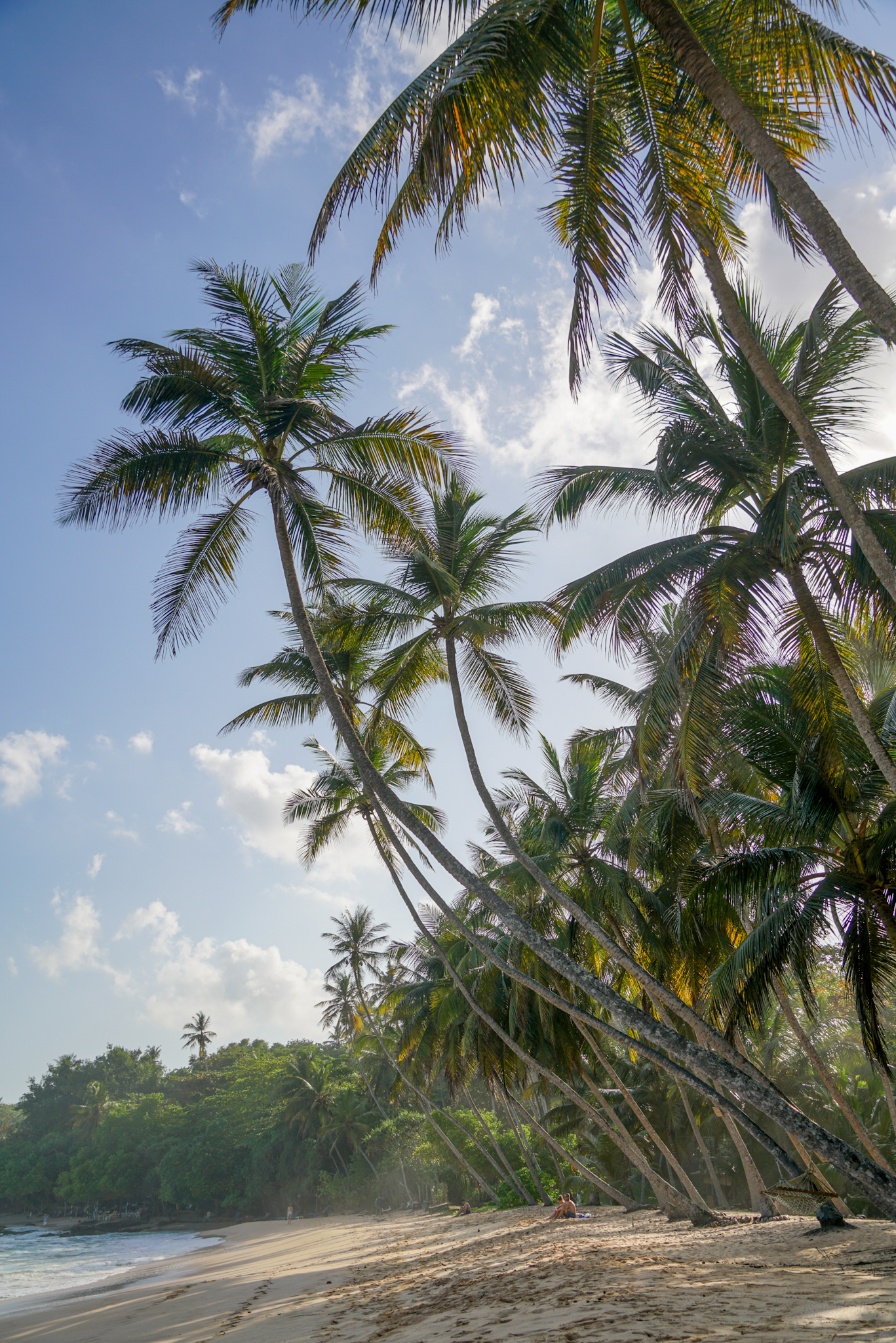
Just before Tangalle, we turn onto a small road in the tuk-tuk. Where are we going now?! The road leads to Goyambokka, a cluster of hotels and lodges nestled between two small beaches: Goyambokka Beach and Silent Beach. We choose the affordable Goyambokka Guesthouse as our base to explore the beaches from Tangalle to Hiriketiya.

TIP – Beautiful, long palm beaches can also be found to the east of Tangalle, up to and including Rekawa Beach (and beyond). We must come back for that!
We are exploring the beaches here for a few days. You can visit these beautiful spots on a long beach-hopping day. It is certainly no hardship to take two or three days (or more) for this. For example, in one day you can beach-hop to:
- Goyambokka Beach at sunrise
- Blue Beach Island (Nilwella)
- Watching boats in the Nilwella fishing harbour
- Strolling along Dickwella Beach
- Lunch at a beach club on Hiriketiya Beach
- Relaxing on Batheegama Beach (Turtle Point)
- Back at Silent Beach for the golden hour
Hiriketiya is the place to be for both tourists and wealthier Sri Lankans. The small bay is full of surfboards, and on the beach, backpackers lie towel to towel. You can also swim in the sea here, or take a dip in the pool at beach club La Playa while you wait for your pizza.

* Accommodation tips from Hiriketiya to Tangalle
At Hiriketiya Beach
At Goyambokka Beach and Silent Beach, you will find some great affordable options:
- Goyambokka Guesthouse at Goyambokka Beach
- Sea Breeze Garden at Silent Beach
For ultimate luxury right on the beach, you can stay at Anantara Peace Haven bordering Goyambokka Beach 2. Ziba Luxury Villa, near Silent Beach, is also a great place for an exquisite stay.
At the end of our first week of road tripping in Sri Lanka, we head into nature. First, we take our tuk-tuk to Tissamaharana, the small town that is the gateway to Yala National Park. The food we order à la carte at My Village Guesthouse is among the top 3 of this trip!

#5 – Discovering the wewas of Tissamaharana (and Sri Lanka)
The water reservoirs – ‘wewas’ or water tanks – of Tissamaharana are truly impressive: some of the largest we encountered at a village in Sri Lanka. At Tissa Wewa, there are beautiful large, old trees along a promenade, and you can swim there. Just keep an eye out in Sri Lanka: you will find water reservoirs near villages everywhere, and some of them are very beautiful!
The wewas are an exceptional example of engineering and water management in Sri Lanka hundreds of years ago. Worth pausing to reflect on!

Apart from its gateway function to Yala NP, Tissamaharana itself isn’t much to look at. Still, when we break a mirror on our tuk-tuk, we find a Bajaj (=tuk-tuk brand) shop in the town of Tissamaharana with parts where we pick up a new one for very little money. Just outside the village lies a beautiful white stupa situated in the rice fields.

#6 – Going on safari in Yala National Park
From Tissamaharana, we arrange a half-day safari in Yala National Park through our guesthouse. The alarm goes off early. We are picked up at a quarter to 5 (!!!). It is still quite a drive to the national park gate. It doesn’t open until 6 a.m. (around sunrise), and before that time, 100 to 200 safari vehicles form a long line to get into the park. We are in spot 3, so we are among the first to head out onto the park’s dusty roads.
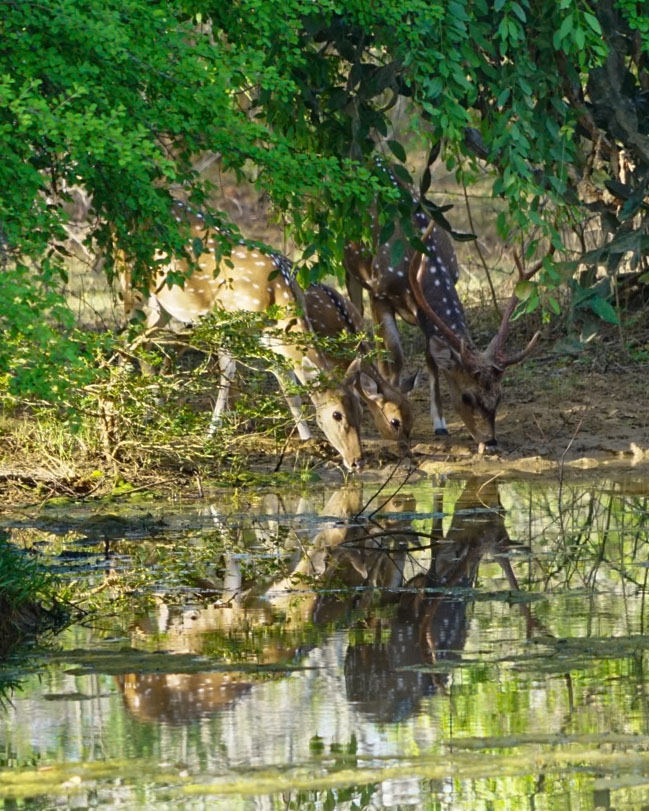
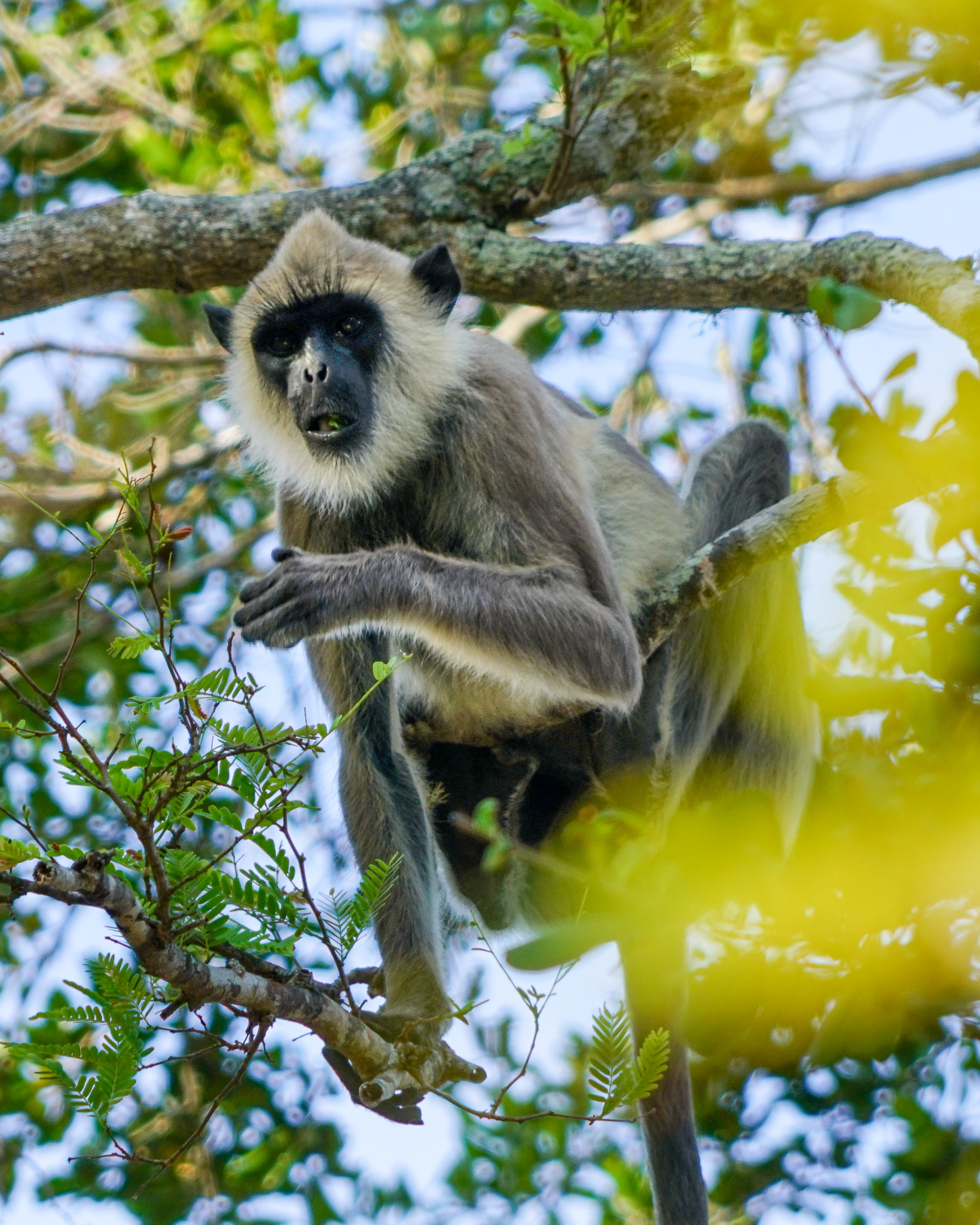
On the half-day tour we take, we see countless peacocks, spotted deer, cheeky monkeys, and beautiful birds. We are lucky enough to see small groups of two or three elephants three times. The leopards hide from us this time.


* Accommodation tips near Yala National Park: Tissamaharana and surroundings
In Tissamaharana, the best hotels are located just outside the center:
You can also opt for a slightly more luxurious hotel or a glamping experience closer to Yala National Park.

For a different experience, you can stay around Kataragama instead of Tissamaharana. There is another entrance here to enter Yala National Park. As a bonus, at Kataragama you will also find one of the holiest Buddhist temples in Sri Lanka.
- Kele Yala
- Wadula Safari Yala
- Funky Leopard Safari Lodge (budget-option)
- Camp Leopard (glamping)
+++++++++++++++++++++++
○ WEEK 2 – The countryside, hills and tea fields of Sri Lanka
Our accommodations during our 2nd week in Sri Lanka:
- The Kingdom Ecolodge & Guest farm – 2 nights (bookings via whatsapp)
- Cozy Homestay – Ella – 3 nights
- The Edgware – Nuwara Eliya – 2 nights
#7 – Farmstay in the Sri Lankan countryside
“It’s so popular among the Dutch, we just have to see it,” we thought… We’re talking about The Kingdom Farmstay & Ecolodge. We meet the jeep somewhere near a Buddhist temple on the main road from Tissa to Ella. We booked 2 nights via WhatsApp, including activities. The cute cottages, the local food (including a cooking class), the guided tour/foraging walk around the farm, and kayaking at sunrise: all good reasons to come.


If you view this as a local farmstay, The Kingdom can be a really fun experience, especially for families or if you are going a bit more back-to-basics for the first time. It also helps if you are a bit of a group person, as the food and activities are with the group that is there at the time, and that can easily be 20 people.
Elephants vs. humans
Many people come here because of the Instagram pictures of elephants. Seeing elephants at The Kingdom Ecolodge is becoming increasingly uncertain, especially on the afternoon safaris. Although driving through the countryside in a jeep is interesting, what you mainly see here is the clash between farm life and the national park that borders it. We do not see elephants in the afternoon.

While farmers try to keep elephants and monkeys off their land (with loud music, cannons, and electric fences), tourists actually try to see the animals. There is still a chance to see elephants here, especially at dusk very early in the morning, when groups of elephants walk past or through the small lake near the lodge. That is also why early morning kayaking is one of the highlights of our stay.
There are also alternatives to The Kingdom Ecolodge that offer similar nature experiences in the countryside in this region:

#8 – Ella’s Hills and Trains
Tuk-tuk-ing north from Wellawaya, the road becomes increasingly winding and climbs steeper and steeper. We are on our way to Ella. This small village is nestled between steep, green mountain slopes. It is clearly a few degrees cooler here than down at the bottom of this winding road. Homestays and small hotels are everywhere in the hills. Ella is bursting at the seams with tourists. And that has its good sides (plenty of dining options and places to sleep!) and its downsides (everything is neatly packaged for the tourist experience).

Nine Arches Bridge and Little Adam’s Peak
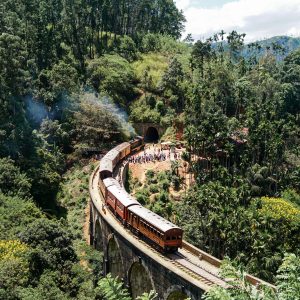
The first day we are in Ella, we walk through the woods to Ella’s – Insta-famous – train bridge: the Nine Arches Bridge. We unexpectedly find it fun and pleasant to hang around a bit, people-watch and watch trains, have a drink, and take photos.
Our second day in Ella, we walked from the Ravana Pool Club and the Ella Swing through tea fields and past the ziplines and rope paths to Little Adam’s Peak. The view of Ella Rock is beautiful, but if you want to go for a walk in the hills of Ella, you are better off walking up that mountain. The area around Little Adam’s Peak is mainly for families and children.
* Accommodation tips in Ella
#9 – Tea fields and colonial history in Nuwara Eliya

In Nuwara Eliya, it is really time for a sweater! We are going a bit higher here than Ella and stop along the way in the tuk-tuk to put on that sweater. Along this road between Ella and Kandy lie the highest-situated tea plantations in Sri Lanka. Coffee was once grown here, but the English eventually opted for tea. Nuwara Eliya was also the place for the colonialists to escape the heat of the lowlands. As such, this vast valley with manicured lawns along a lake, a post office, and real pubs does not exactly remind one of Sri Lanka.
From Nuwara Eliya, we explore the surrounding tea fields. We take particular time for the Labookellie plantation, where we take a free tour of the tea factory and navigate the narrow lanes between the tea bushes by tuk-tuk. In Nuwara Eliya, we treat ourselves to High Tea at The Grand Hotel. Quite kitschy… and yet fun!
* Accommodation tips in Nuwara Eliya
- The Edgware – nearby is restaurant Themperadu, a recommended and popular restaurant that sometimes features live music.
- Serendipity Lake Artistic Bungalow
- The Bungalow
- The Ramp
+++++++++++++++++++++++
○ WEEK 3 – Kandy, Sigiriya, Dambulla and Pollonaruwa
Our accommodations in the 3rd week of our Sri Lanka road trip:
- Devon Rest – Kandy – 2 nights
- Il Frangipane – Sigirya – 4 nights
#10 – Pilgrims and pizza in Kandy
As we don’t want to travel excessively long distances in the tuk-tuk – preferably a maximum of 4 hours a day – we are making a stopover in Kandy. We hear from various Buddhist Sri Lankans that this city holds a special place in their hearts.

Here stands the Temple of the Tooth, the heart of Sri Lankan Buddhism (perhaps along with the stupas of Anuradhapura). Sri Lankan Buddhists believe that a tooth of the Buddha lies here as a relic. Throughout Sri Lankan Buddhist temples, you find the story of how the tooth came to Sri Lanka depicted in murals.
We make our way into the crowd, leave our shoes at the designated booth, and gaze in wonder at the people dressed in white. They are bringing flower offerings. We let ourselves be swept along by the stream of people to the heart of the temple. Inside the white building stands a smaller wooden structure with endless details in its woodcarving and paintings. Stairs wind upwards to a gallery. Tables laden with flowers, people sitting on the ground, praying.

Buddha statue with a view over Kandy
After lunch in a tiny coffee shop in the bustling center of Kandy, we take a taxi to a Buddhist temple on a hilltop. Here, a large white Buddha statue towers high above the city. A Bodhi tree stands at its feet. We walk up stairs along the back of the statue to look out over the hills and the lake above the trees.

In the evening, we walk along Lake Kandy to an expensive new restaurant in Kandy – the Hideout Lounge. After all the pilgrims, it is time for a luxury pizza.
* Accommodation tips in Kandy
#11 – Up a rock in Sigiriya
We begin our third week in Sri Lanka in Sigiriya. Strictly speaking, Sigiriya is just a hamlet, but here you will find one of Sri Lanka’s most famous places: the Lion Rock, towering high above the surrounding plains. That is why you will find many guesthouses and small-scale hotels all around.
Like many others, we chose to climb Pidurangala Rock to get a view of Lion Rock. The last part of the hike is a real scramble, but we made it. It was actually great to go up just after sunset, so we didn’t have to walk up in a queue in the dark. Later in the day, we viewed Lion Rock from a distance from one of the eateries by the water in Sigiriya.

TIP – Sigiriya is well located between several destinations in this region. From this lovely spot, we can head to Dambulla one day to visit the most fantastic cave temples – wow! And then, the next day, arrange a driver to take us back and forth to and between the ruins of the ancient royal city of Pollonaruwa. There are also national parks with elephants nearby.
* Accommodation tips for Sigiriya
Along with our Hotel Aurora in Unawatuna, our Hotel Il Frangipane in Sigiriya is perhaps the best of this trip. And there are certainly more beautiful places to stay to be found in and around Sigiriya.
#12 – The cave temples of Dambulla: a highlight!
We take our tuk-tuk along a back road from Sigiriya to Dambulla, passing the Kandalama reservoir. Today we are visiting the cave temples of Dambulla. At the foot of the King’s Way, the old staircase leading up the mountain, we park the tuk-tuk (for free) and climb the stairs. By now, we are used to leaving our shoes with a little man with a cupboard full of shoes at the top of the stairs, up the rock. When picking them up later, we give him 100 rupees (approx. €0.30).
Passing through the gate, we come across an overhanging rock on a plateau beneath which a temple has been built. A large bodhi tree is surrounded by cheeky monkeys that pounce with some aggression on anyone taking something out of their bag. We loose a packet of handkerchiefs…

We are in Dambulla for the caves. Through narrow passages, we enter dark spaces. In the first, there is a large Buddha statue next to a spot where people are blessed by a monk. In the subsequent series of caves, we find a rich collection of statues and paintings in the dimly lit rooms. Sri Lankans are sitting and chanting aloud ; it echoes a little in the cave. This is truly fantastic! We go from cave to cave, taking the time to pause and reflect on what we see. Wow! Blinking our eyes, we stand outside again in the heat and bright light.

#13 – Among the ruins of the royal city of Pollonaruwa
Another day, we arrange a driver to take us to Pollonaruwa. This is one of the ancient royal cities of Sri Lanka, and in Pollonaruwa there is a large ruin complex with remnants of palaces and temples.
Some blogs and travel guides suggest renting a bike here and cycling between the sights. At 40°C, we found that a bit excessive. In our opinion, that is really only an option if you are staying in Pollonaruwa and set off very early. We were happy with the car’s air conditioning every now and then.
Buying your tickets for Pollonaruwa
Please note that you must purchase your tickets for the extensive Pollonaruwa archeological site at the Archaeological Museum Complex. Tickets may be checked at various locations near the ruins. This museum is located right next to the large Bendi Wewa reservoir; unfortunately, the ruins directly by the museum and the lake are somewhat neglected and polluted. Further along, however, the situation is different.

The sights that are actually worth seeing are scattered from here along a 5-kilometer route from south to north. A few places not to miss in Pollonaruwa:
- Kumara Pokuna – The Royal Pond at the Royal Palace; you will also find a stall with cold drinks here.
- Vatadage & Hatadage – A temple complex with several relatively well-preserved remains of temple buildings. Don’t forget to look for the reliefs on the walls and on the moonstones on the ground near the entrances. Shoes must be removed here. Put on socks, because the ground is hot!!!
- Take a short break at a stall with cool drinks (and possibly souvenirs) and a toilet break before or after visiting Lankatilataka Temple and Kiri Vehera (stupa).
- Gal Viharaya – A series of Buddha statues carved into a single freestanding rock face. Sri Lankans themselves, in particular, consider this a very important place to see the Buddhas and pay their respects.
- Thivanka Image House – A unique temple with many details in the sculptures on the outside, but especially the unique, weathered paintings on the inside. A local guide is more than willing to point out the paintings. Give him a tip when you are finished looking.


#14 – The Gathering: Seeing hundreds of elephants together
We spontaneously decide to go on an elephant safari from Sigiriya. At our guesthouse, they tell us that at this time (September), the elephants mainly gather in Kaudulla National Park (slightly quieter than Minneriya NP, which is the most popular spot for safaris). And we are lucky: we see more than 200 elephants; this is what they have come to call The Gathering here, the time of year when hundreds of elephants flock to the fresh green grass around the lakes of Minneriya and Kaudulla.


+++++++++++++++++++++++
○ WEEK 4 – Trincomalee, Anuradhapura, Wilpattu NP
Our accommodations during the 4th and final week of our trip around Sri Lanka:
- Golden Beach Hotel & Restaurant – Trincomalee – 4 nights
- Hotel Heladiv – Anuradhapura – 2 nights
- The Backwaters Lodge – Wilpattu – 2 nights
#15 – The beaches and Tamil culture at Trincomaleee
To see a completely different part of the country, we take a tuk-tuk from Sigiriya to Uppuveli, just north of the town of Trincomalee. It is the end of the season on the east coast; the first showers of the rainy season are already falling. But we have enough sun for a beach feeling, and it is incredibly hot here! We try out various eateries on and near the beach.

During a morning of snorkeling in Pigeon Island Marine National Park, we see sharks swimming beneath us and turtles flying through the water. Unfortunately, underwater visibility is poor due to rain and wind during the night. Despite the shadow of a shark, this is certainly not the best snorkeling spot we have ever seen. Perhaps you will have more luck.


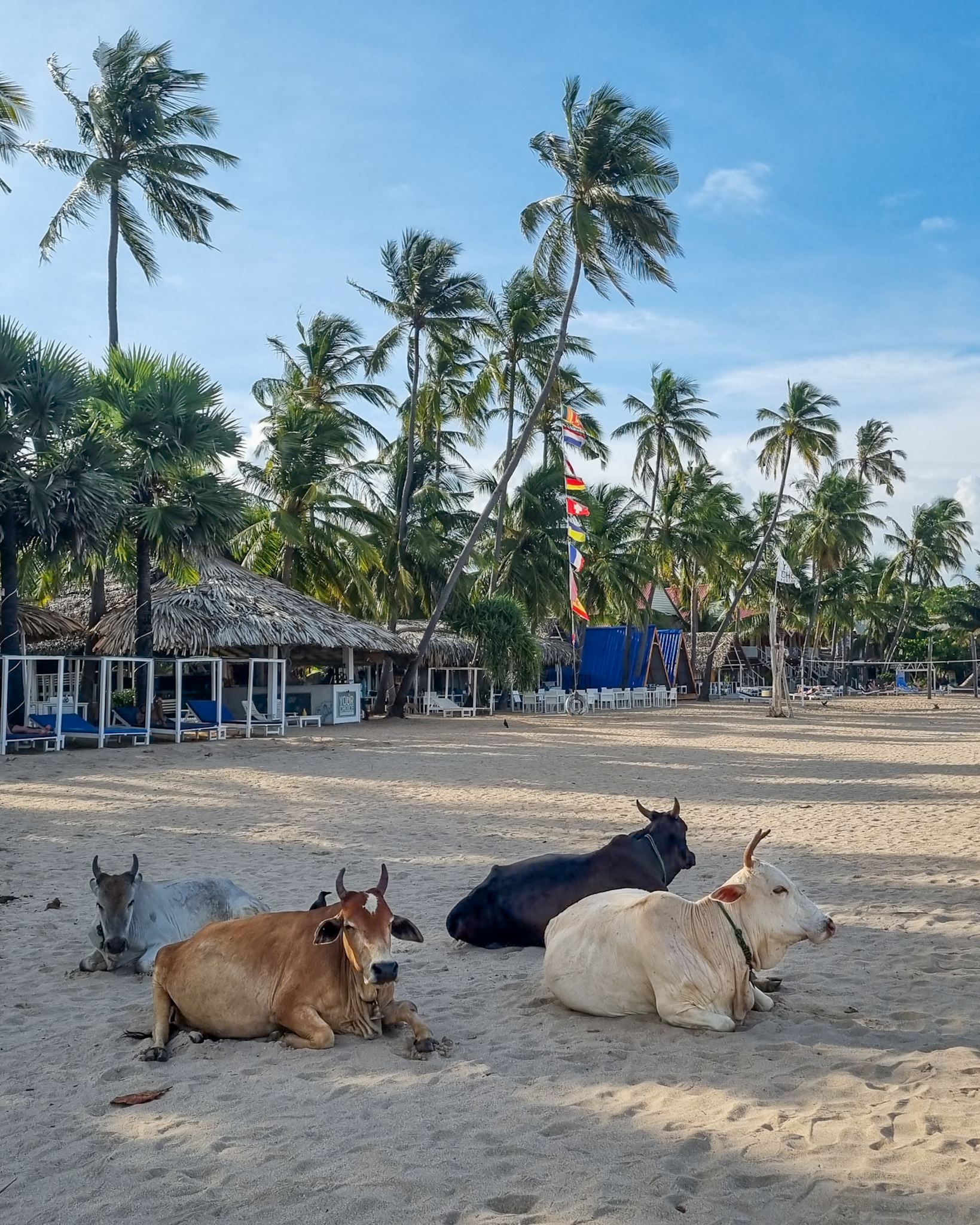
From Uppuveli, we take a day trip by tuk-tuk to Trincomalee, with its large Hindu temple on the cliffs by the sea. The north clearly has a different culture: many Tamils live here, and people speak mainly Tamil and much less Sinhala. You can usually get by perfectly well with English, by the way. We also take a tuk-tuk ride for a day to the deserted beach of Nilaveli, north of Uppuveli.

* Accommodation tips around Trincomalee
Around Trincomalee, you have to search hard to find good accommodation at a reasonable price. Also, check rooms and hotels multiple times, as prices can fluctuate enormously:
#16 – The stupas and Bodhi tree of Anuradhapura
Back inland. We are heading towards Anuradhapura. It is an unexpectedly large, new, and busy city. But the modern city is not the destination. That is the ancient stupas that mark the location of the old royal city.


Anuradhapura’s archeologocal complex is vast. Driving around in your tuk-tuk (or arranging a taxi or tuk-tuk with a driver for the day) is the best option for getting from sight to sight. A number of areas, the largest stupas, are only accessible with paid admission, with a ticket of €30 per person. We are starting to get a bit tired of stupas and choose to visit the free sites independently. However, we would still recommend spending a day visiting the paid spots in Anaradhapura as well, especially if you are at the beginning of your trip.

An (almost) free route around Anuradhapura’s ruins and temples
We visit:
- Mirisawetiya stupa, a solitary stupa on the edge of Anuradhapura’s archaeological complex. Clean toilets for a small donation.
- Jaya Sri Maha Bodhi, an impressive temple complex surrounding the sacred Bodhi tree, full of Buddhist pilgrims
- Ruwanweli Pagoda, one of the great pagodas of Anuradhapura. Technically, this is part of the paid ticket, but it is so crowded that walking along with the crowd, we are lucky enough to be able to join the masses from Sri Maha Bodhi.
- Isurumuniya Temple, a relatively small temple complex in and around a rock with a water feature, surprising rock reliefs, a beautiful small temple, and a bat cave. You pay a few euros entrance fee here. From the top of the rock, you look out over the large reservoir of Anuradhapura Thissa Wewa. You can also walk into the Royal Park (Ranmasa Uyana) from here for some smaller sights and a bit of shade in the heat.
On the day we are there, the major sites of Anuradhapura are extremely crowded with pilgrims. Busloads of people dressed in white walk barefoot from temple to temple. Many sit in large groups around the Bodhi tree, praying to the accompanying chanting of Buddhist monks. Along the footpaths, flower offerings are sold, which are placed at the foot of the large stupas or by Buddha statues.

* Accommodation tips in Anuradhapura
#17 – Experiencing the mystique of Mihintale
Since we are staying at Hotel Heladiv just outside Anuaradhapura, it is very easy for us to take a quick tuk-tuk to the Mihintale temple complex at the end of the day. Even if you are staying further away, I wouldn’t skip this place. Many people only come for sunset, but we definitely recommend being up there at least an hour before sunset to hang around a bit, chat with Sri Lankans, and check out various spots on top of the mountain.


Mihintale is the place where Buddhist Sri Lankans believe Buddhism arrived in Sri Lanka. A collection of beautiful stupas and temples has been built atop a rock formation. You can walk the entire mountain up the stairs with 1,800 steps. Or, in just 10 minutes, take only the final, wide stairs to the central plateau by parking at the Lion Pond car park. From the central plateau, with the most beautiful white stupa, you can choose to take one or more steep flights of stairs to a Buddha statue, a viewpoint, or the two large stupas overlooking the surrounding landscape.
TIP – Don’t have your own transport or only have a short time? Then, on an intensive, long day, you can combine a morning at Anuradhapura with a short siesta, lunch, and sunset at Mihintale by arranging a combo tour.
#18 – Spotting wildlife in Wilpattu
From Anuradhapura, you can reach the gates of Wilpattu National Park in about an hour. This large, beautifully forested nature reserve promises the opportunity to see elephants, leopards, and much more. Of course, finding those animals is not guaranteed. A good guide also looks for the smaller animals.

Many people book a day tour or half-day tour to Wilpattu from Anuradhapura. We choose to drive to a different entrance. We left the tuk-tuk in Anuradhapura – and had it picked up by Tuktukrental. So this time, we are taking a taxi to our final destination.
TIP – Multiple phone numbers for drivers or taxi companies circulate in WhatsApp groups. We arranged our taxis via Less Taxi. Very smooth contact via WhatsApp, service with booking confirmations on the website, and good communication via WhatsApp on the day itself.


At Backwaters Lodge, we have a special spot just outside the park. There are places everywhere to lounge, gaze at the river, take a quick swim (in the river!), look for animals, or read a book in a hammock. We even spotted a giant squirrel on the grounds again!
Because we are staying here, we can be among the first to go looking for animals in Wilpattu NP the next morning. During a half-day safari, we see beautiful birds, monkeys, deer, and more. And yes, we also manage to find elephants and even, albeit in the distance, a leopard!

* Slaaptips voor Wilpattu
- The Backwaters Lodge (at the southern entrance to the park; keep this in mind when arranging a safari)
- Green Sapphire Holiday Resort
- Wilpattu Tree House
○ Last night: Negombo
- Serendib Village Guesthouse – Negombo – 1 night
We are wrapping up our 30-day trip through Sri Lanka with a final night in Negombo. Time to rest, eat real Austrian schnitzel (!), say goodbye to the last barking stray dogs, buy the last souvenirs, and see the beach one last time (although it can’t compare to the beaches on the south coast).
If you have some time left, you can easily take a taxi from Negombo into the capital, Colombo. We’ll leave that for next time.
* Accommodation tips voor Negombo
* Slaaptips voor Colombo

+++++++++++++++++++++++
BONUS: Books about Sri Lanka
○ For travel guides, we recommend the Sri Lanka Lonely Planet and the Bradt-guide for Sri Lanka.
There are many English-language books about Sri Lanka. Also by Sri Lankan authors! We recommend:
- Elephant complex: Travels in Sri Lanka – John Gimlette
- The Seven Moons of Maali Almeida – Shehan Karunatilaka
- Anil’s Ghost – Michael Ondaatje
- Island of a Thousand Mirrors – Nayomi Munameera
- Running in the Family – Michael Ondaatje